fraud scam

Fraud Prevention & Identity Verification

Telecom operators and regulators play a vital role in securing the digital economy. As fraud skyrockets, with telecom and financial crime increasingly linked, Intersec provides AI and CAMARA APIs to protect subscribers, safeguard financial ecosystems, enable secure digital services, and unlock new revenue.

Intersec AI: next-gen metadata intelligence
Network exposure through APIs
Technical sheet: Network APIs


Telcos’ mandate: Secure the digital economy
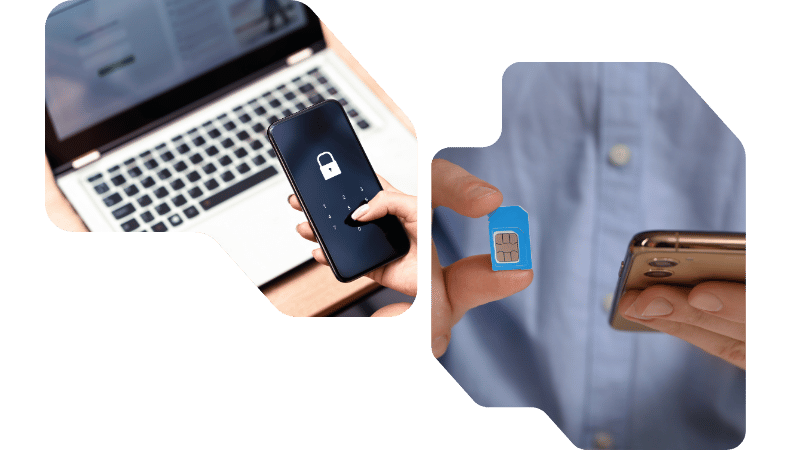
Fintech growth, digital services, and increasing mobile penetration are transforming risk. In regions like the Middle East, Africa, and Europe, telecom networks are now the first line of defense against both telecom and financial fraud. Regulators and operators must work together to safeguard trust and maintain service integrity.

Intersec empowers you to:

  • Detect emerging fraud patterns in real time
  • Strengthen national digital security frameworks
  • Reduce subscriber losses and customer complaints
  • Support financial institutions with trusted telecom data
  • Comply with regulatory expectations for fraud mitigation

fraud and identity


Use Case: Fraud prevention

The Challenge

Fraudsters increasingly exploit telecom assets (SIMs, OTPs, call forwarding, mobile money) to trigger scams and initiate fraudulent transactions. Victims often receive legitimate-looking authentication messages, unknowingly sharing an OTP with the attacker.

The result

Substantial financial losses and reputational damage for mobile operators and banks.

Powered by Intersec AI

Intersec AI analyzes network activity to uncover abnormal or malicious patterns such as:
  • Suspicious OTP frequency
  • SIM swap attempts
  • Device/SIM inconsistencies
  • Cross-channel social engineering behaviors
  • High-risk transactional triggers
Value for Operators
  • Reduce fraud-related churn
  • Deliver fraud insights as a regulated service for banks/fintechs
  • Support national security mandates
  • Position the MNO as a trusted guardian in the digital economy

Example scenario
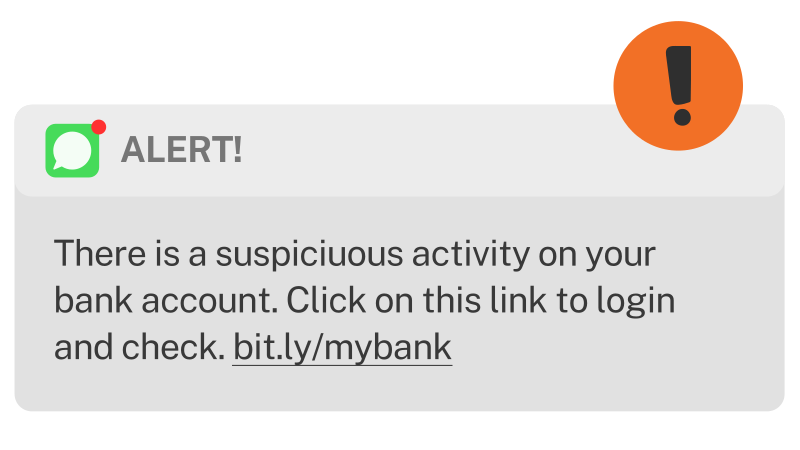
scam 2FAA user receives a 2FA message unexpectedly. Intersec identifies the anomaly, tags the attempted bank transaction as high-risk, and enables the bank to pause or reject the operation.



ETSI-LogoTag_press
Logo_3GPP
logo-OMA2
gdpr_act
TM_Forum_Logo
CAMARA Logo
GSMA_logo_(red).svg
ETSI-LogoTag_press
Logo_3GPP
logo-OMA2
gdpr_act
TM_Forum_Logo
CAMARA Logo
GSMA_logo_(red).svg
ETSI-LogoTag_press
Logo_3GPP
logo-OMA2
gdpr_act
TM_Forum_Logo
CAMARA Logo
GSMA_logo_(red).svg

Use case: Secure authentication

The challenge

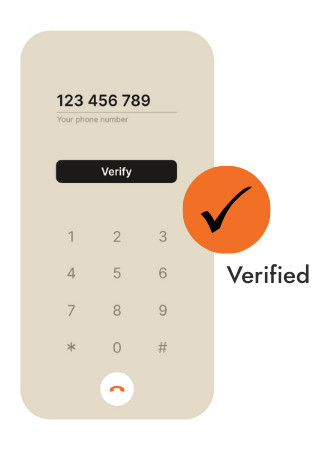
Businesses need frictionless authentication solutions that don’t rely on SMS OTPs, which are costly and vulnerable to interception and social engineering. Telecom operators want to launch such services, but the complexity of API exposure, security, and orchestration can be overwhelming.

Number Verification API

CAMARA APIs represent a major step forward in how operators can offer authentication services. Instead of SMS OTPs, enterprises use an API that silently verifies that a user’s phone number matches their device and network.

Intersec provides out-of-the-box readiness to expose Number Verification APIs:

  • Ready-to-expose Number Verification APIs
  • Compliance with standards from GSMA/CAMARA
  • Secure, privacy-by-design models
  • Simplified integration for CPaaS & enterprise partners
number verification


40B
In 2023, global telecom fraud losses amounted to ~$40 billion, with growth rates in the double digits per year (source: CFCA).
24
Intersec offers full support of 24 CAMARA APIs across three key categories: Location Services, Authentication & Fraud Prevention, Device Information.

Disruptive AI and API capabilities

intersec ai laptop

Intersec AI

Reveal fraudulent patterns

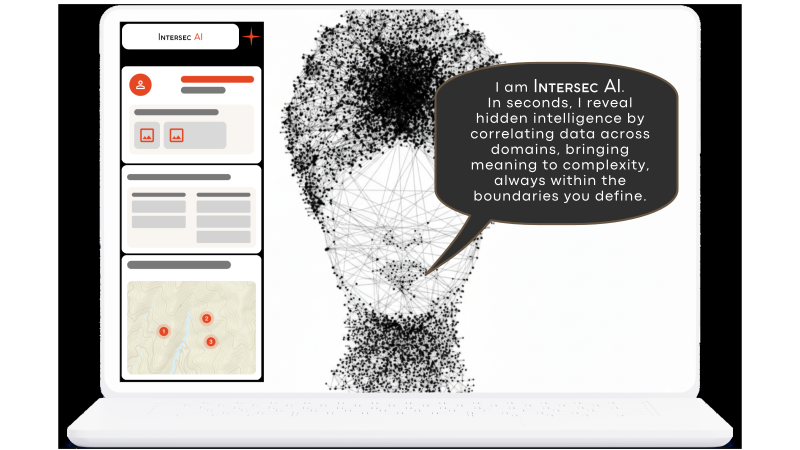
Intersec AI analyzes real-time network activity to spot anomalies such as unusual OTP volumes, inconsistent device–SIM pairings, or suspicious location changes. These signals help telecom operators and banks classify transactions as low or high risk. How it works? Intersec AI correlates multiple operator-grade datasets, including CDRs, signalling events, SIM-activity patterns, device behaviour, and network-based mobility indicators. The system learns from historical and real-time patterns to detect emerging fraud schemes with high precision. Because Intersec AI relies only on network metadata, the solution is non-intrusive, privacy-preserving, and fully compliant with strict regulatory requirements.

camara laptop

Intersec APIs

Telecom network exposure

With 5G SA, telecom networks can securely expose advanced capabilities, such as activity, mobility, and device signals, through standardized APIs. Intersec supports CAMARA APIs, including those designed specifically for fraud-prevention use cases: Call Forwarding Signal, Consumer Insights, Device Swap, KYC Age Verification, One-Time Password SMS, SIM-Swap Subscription, and more. Our Agora platform leverages Intersec’s leading location intelligence and mobility analytics to power these CAMARA APIs, applying rich telco metadata to a wide range of use cases that extend far beyond geolocation.

QUESTIONS

Frequently asked questions

What role do telecom operators play in fraud prevention?

more

Telecom operators are the first line of defense because many fraud attempts rely on telecom channels: OTP interception, SIM swaps, spoofed calls, and device manipulation. By detecting irregular network behaviours with AI, operators can identify fraud patterns before they escalate into financial losses.

Why is telecom fraud linked to financial fraud?

more

Fraudsters often initiate financial crime through telecom mechanisms, such as triggering authentication messages or compromising phone numbers. Preventing telecom fraud therefore indirectly prevents financial fraud.

What is an example of a fraud pattern Intersec can detect?

more

A common pattern occurs when a user receives an unexpected OTP triggered by a fraudster. Intersec identifies this anomaly and can alert the operator or financial institution that the transaction may be fraudulent.

What is CAMARA-ready Number Verification API?

more

This standardised telecoms API allows businesses to verify that a user’s phone number matches their device and network without requiring an SMS one-time password (OTP). It provides secure, frictionless authentication. Intersec offers full support for CAMARA's Number Verification API, as well as all the other CAMARA APIs in three categories: authentication and fraud prevention; location services; and device information. To see the full list of CAMARA APIs that we support, visit the page: Network exposure through APIs.

How does Intersec support operators adopting CAMARA APIs?

more

Intersec supports operators adopting CAMARA APIs by providing a fully integrated stack that combines standards-compliant APIs with advanced AI-driven intelligence. Operators can quickly expose CAMARA capabilities—such as Number Verification and fraud-prevention APIs, through Intersec’s pre-integrated interfaces, orchestration tools, and deployment frameworks. Beyond the API layer, Intersec offers an AI platform that enriches these APIs with real-time network insights, behavioural analytics, and risk scoring, enabling smarter, high-value services for enterprises and digital platforms. With Intersec, operators can launch CAMARA APIs faster and deliver them with intelligence that goes far beyond simple network exposure.

Why should regulators be involved in telecom fraud mitigation?

more

Regulators play a critical role in seuring the digital economy. They can enforce security standards and ensure that operators fully leverage their network intelligence to reduce fraud and protect consumers. They can mandate a unified approach across all operators, ensuring consistent APIs, policies, and fraud-mitigation capabilities nationwide. This harmonisation is a key success factor: it simplifies implementation for banks and digital platforms, ensures interoperability, and accelerates adoption of secure telco-powered services in the B2B ecosystem. Their involvement is especially important in fast-growing markets, where mobile money and digital banking accelerate fraud risks.