.svg)
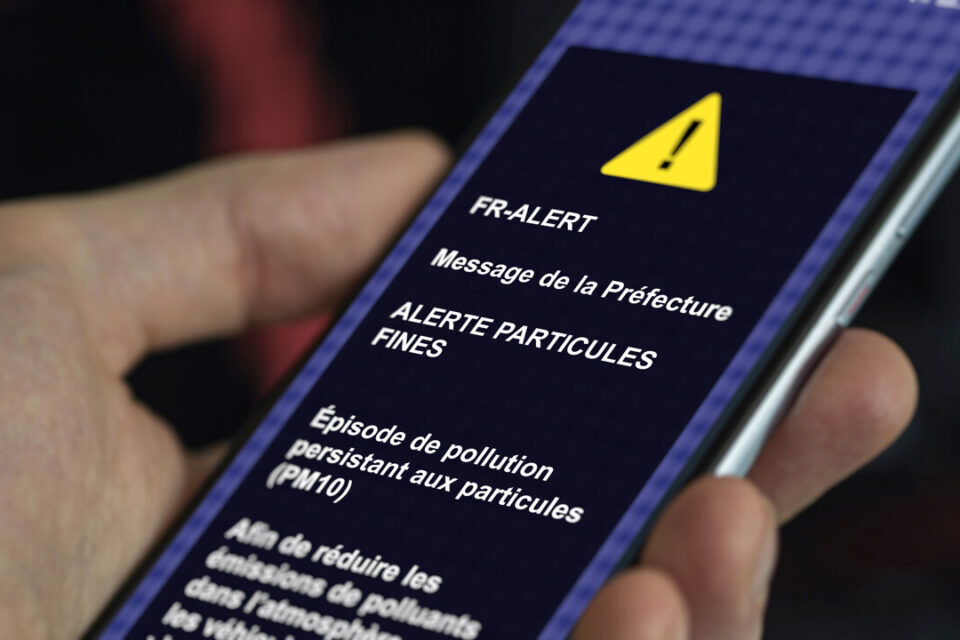 FR-Alert: one system, many emergencies" />
The French government announced that FR-Alert will be extended to child abduction alerts, pushing targeted messages to smartphones in the relevant geographic area. The news is a reminder that FR-Alert is far more than a weather warning tool. Most people associate it with storms and flooding, and for good reason: meteorological events account for the majority of its real-world activations since the system launched in June 2022. But its scope is considerably broader, as the examples below show.
Natural and meteorological risks
Weather alerts are where FR-Alert gets used most. Between June 2022 and June 2025, 66 real activations were recorded, with 21 for flooding and 24 for severe storm red alerts. Overseas territories add volcanic eruptions, tropical cyclones, and tsunamis to the mix.
Meteorological: Floods in particular are the most common trigger, which explains why they account for such a significant share of activations. The Pas-de-Calais floods of late 2023 and early 2024 are a good illustration: five FR-Alert notifications were sent during the flooding of the Aa basin, as over 11,000 buildings were inundated and more than 9,300 residents were directly affected.
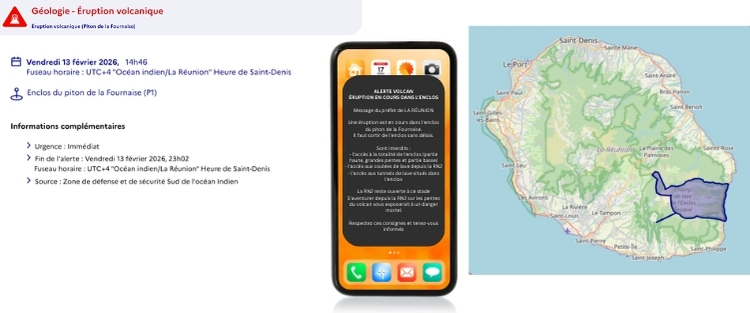
Preview of the alert message and targeted zone for the volcanic eruptions, FR-Alert website
Geological: On 29 July 2025, a magnitude 8.7 earthquake off the coast of Kamchatka sent tsunami waves towards the Pacific, with the Marquesas Islands directly in their path. FR-Alert was triggered across the entire archipelago, 700 of the islands' 6,119 inhabitants were moved to safety, and there were no casualties. Similarly, the island of La Réunion received alerts in February 2026 for eruptions from Piton de la Fournaise. 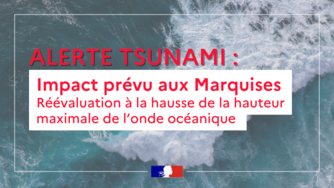
Industrial accidents
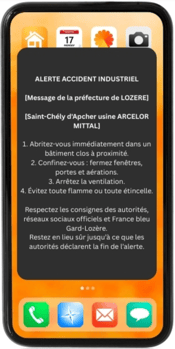 France has over 1,300 SEVESO-classified industrial sites, facilities handling hazardous substances that pose specific risks to surrounding communities in the event of a leak, fire or explosion. When something goes wrong, the window to warn nearby residents is narrow.
On 8 January 2024, a fire broke out at the ArcelorMittal steelworks in Saint-Chély-d'Apcher, Lozère. Flames started in a 15-metre deep pit where oils and other liquids were stored, generating significant smoke and prompting the evacuation of all plant personnel. The prefecture of Lozère immediately triggered an FR-Alert, instructing residents within a 750-metre radius to shelter in place, close doors and windows, and turn off ventilation, while 30 firefighters intervened on site. The confinement order was lifted within the hour.
Unexploded ordnance
Wartime munitions still surface during excavation work across France, and clearing them means emptying the surrounding area first. On 10 April 2026, a Second World War bomb was discovered in Colombes, near Paris. Bomb disposal specialists first tried to extract the detonator, and when that proved impossible, buried the munition in a two-metre pit and destroyed it in a controlled underground explosion on 19 April.
Around 15,000 residents within a 450-metre radius were evacuated at dawn, alerted by FR-Alert and instructed to leave on foot. The operation mobilised hundreds of personnel and several reception centres before the security cordon was lifted that afternoon, once the bomb had been neutralised. Image credits: AFP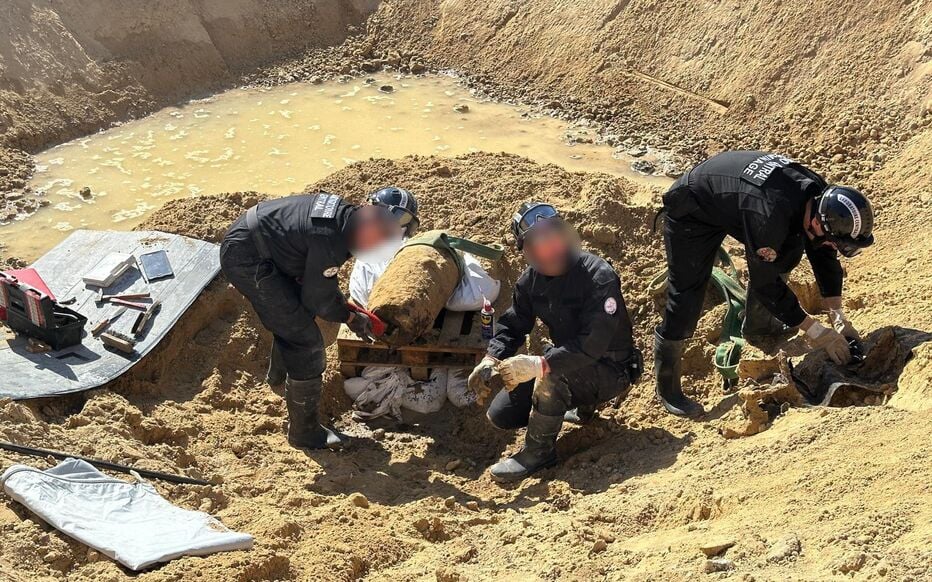
Health and sanitary risks
In September 2025, Antibes became the site of the largest chikungunya outbreak ever recorded in metropolitan France, with 103 confirmed cases concentrated in the Saint-Claude neighbourhood. The prefecture of Alpes-Maritimes triggered an FR-Alert to thousands of residents and visitors across the city, instructing them to protect against mosquito bites, eliminate stagnant water around their homes, and consult a doctor if they developed symptoms. It was the first time FR-Alert had been used for an infectious disease outbreak in France.
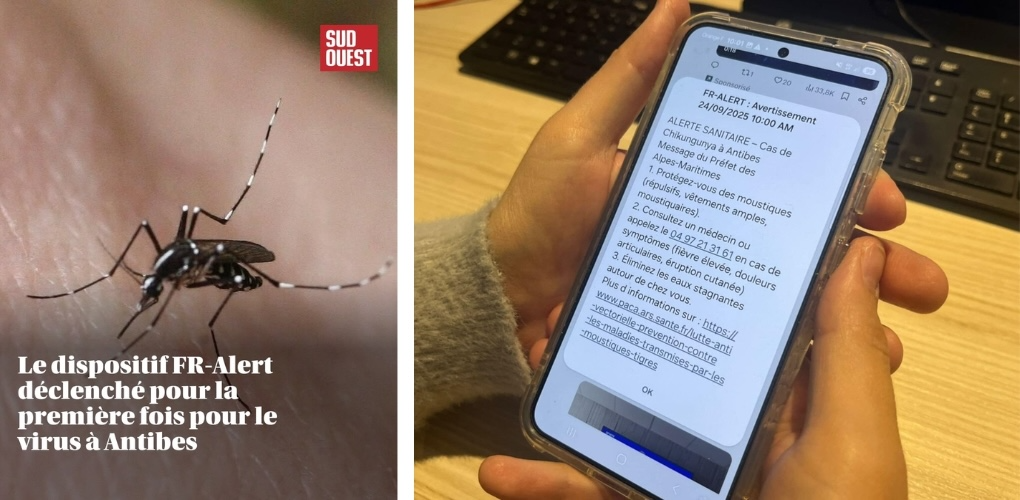
FR-Alert message received for the Chikungunya outbreak in Antibes
It was not the first health-related activation, however. In April 2024, the prefecture of Indre-et-Loire had already used the system to warn residents of several municipalities not to drink tap water following a contamination risk, showing that FR-Alert's reach extends to everyday public health situations as much as epidemics.
Wildlife and environmental hazards
Probably one of the more unusual activations on record, in May 2023, around 30,000 people gathered at Villegongis for the 30th anniversary of the Teknival, an unauthorized techno festival. Two attendees were bitten by vipers on the Friday, with both placed in critical care. The prefecture of Indre immediately sent an FR-Alert to all smartphones located in the zone, warning festival-goers of the presence of snakes and the right steps to take in case of a bite. Image credits: BFM TV
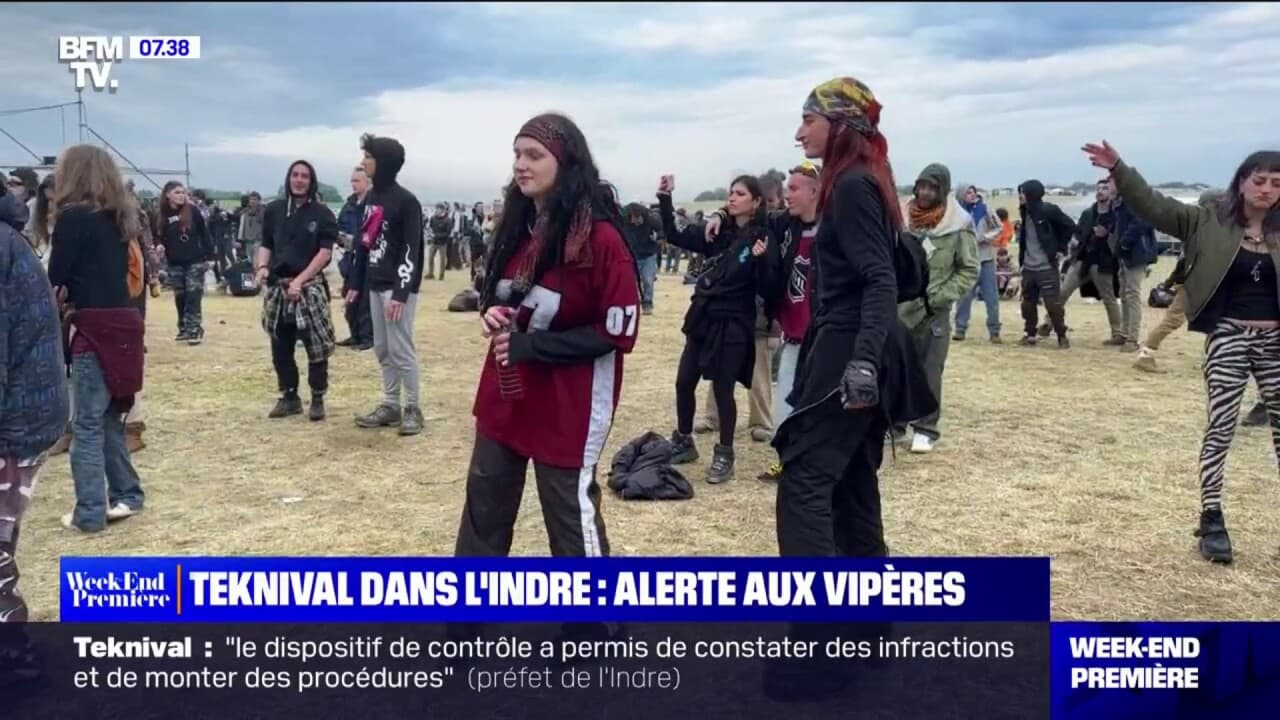 BFM TV coverage of the Teknival viper alert, May 2023.
Infrastructure and public order
FR-Alert is not limited to natural or industrial threats. Authorities can use it for any situation where the public needs to be reached quickly within a defined area:
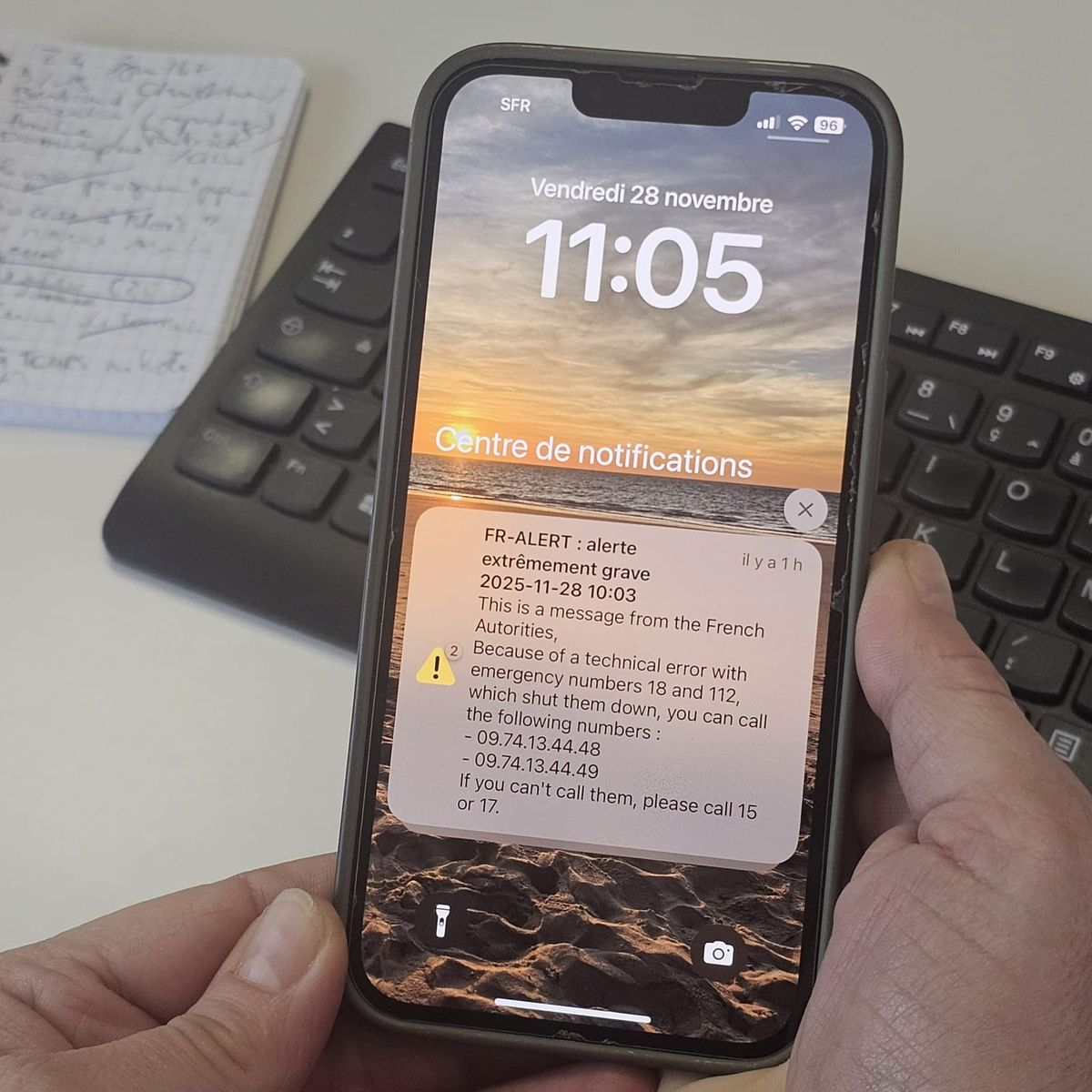
An FR-Alert notification received on 28 November 2025, warning residents that emergency numbers 18 and 112 were temporarily unavailable in the Loiret.
Emergency line failures: In November 2025, residents of the Loiret found that the 18 and 112 emergency numbers were inoperable due to a technical failure affecting the department's call centre. The prefecture immediately triggered an FR-Alert across the entire department, pushing alternative contact numbers to every mobile device in the area. The situation was back to normal within 45 minutes. Image credits: © France télévisions
Traffic and public events: on 9 May 2024, inhabitants of Coutances in the Manche department received an FR-Alert informing them that motorised vehicles were prohibited on a specific route due to a Color Run taking place in the town. A low-stakes situation by comparison, but the same principle: a defined zone, a time-sensitive message, and the need to reach everyone in it.
Child abduction alerts
The French child abduction scheme has been triggered 37 times since its creation in 2006, helping locate 38 children alive. Until now, alerts were distributed through media partners, motorway operators, transport networks and urban display systems. FR-Alert changes the scale of that reach entirely.
Announced on 12 March 2026 by Justice Minister Gérald Darmanin on the occasion of the scheme's 20th anniversary, FR-Alert will be integrated into the “Alerte enlèvement” framework, pushing alerts directly to smartphones in the relevant region.
Unlike previous FR-Alert activations, which operated at the departmental level, child abduction alerts will be sent at the regional level, covering all four main mobile operators and secondary operators using their networks. The target is to reach 75% of smartphone holders in the affected zone. No rollout date has been confirmed yet. Image credits: Maritima
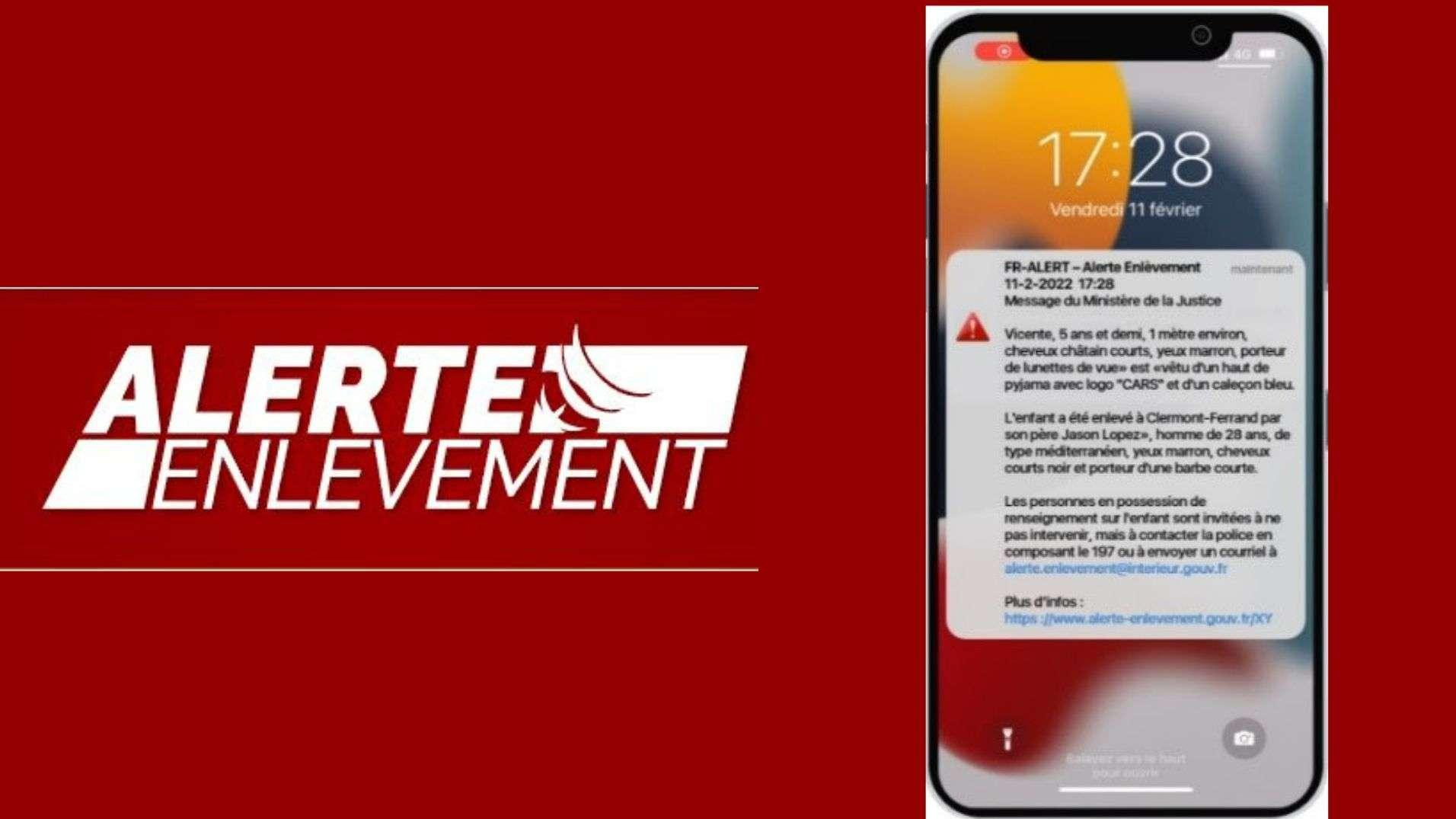
In the words of the French Justice Minister, Gérald Darmanin:
"The FR-Alert notification system will be used at the regional level when a child abduction alert is triggered, in addition to the distribution of the alert through the usual partners." (source: Ministry of Justice)
What FR-Alert demonstrates, use case by use case, is that a single public warning infrastructure can serve a remarkably wide range of situations. That flexibility is increasingly what governments and telecom operators are looking for when they evaluate public warning systems. The question is no longer whether to have mass notification capability, but how precisely and how rapidly it can be deployed when the moment arrives. Built on Intersec's combined Location-Based SMS and Cell Broadcast platform, FR-Alert is a reference for what modern public warning can and should be capable of.
To learn more:
→ Download our FR-Alert success story
→ Blog article on the GSMA report on FR-Alert: The Role of Mobile Network Operators in Early Warning Systems
.jpg)
Editorial team
LinkedinThe Intersec editorial team is made up of professionals who share expert insights on AI-powered innovations, mission-critical communication solutions, and 5G location intelligence across civil protection, homeland security, and telecommunications.

Cell Broadcast Emergency Alerting live in 10 days
47 deployments. Four continents. Active conflict zones. We're not generalists who added public warning to a product catalog. This is all we do — and we're faster, deeper, and more adaptable than anyone.





.webp)


.webp)