.svg)
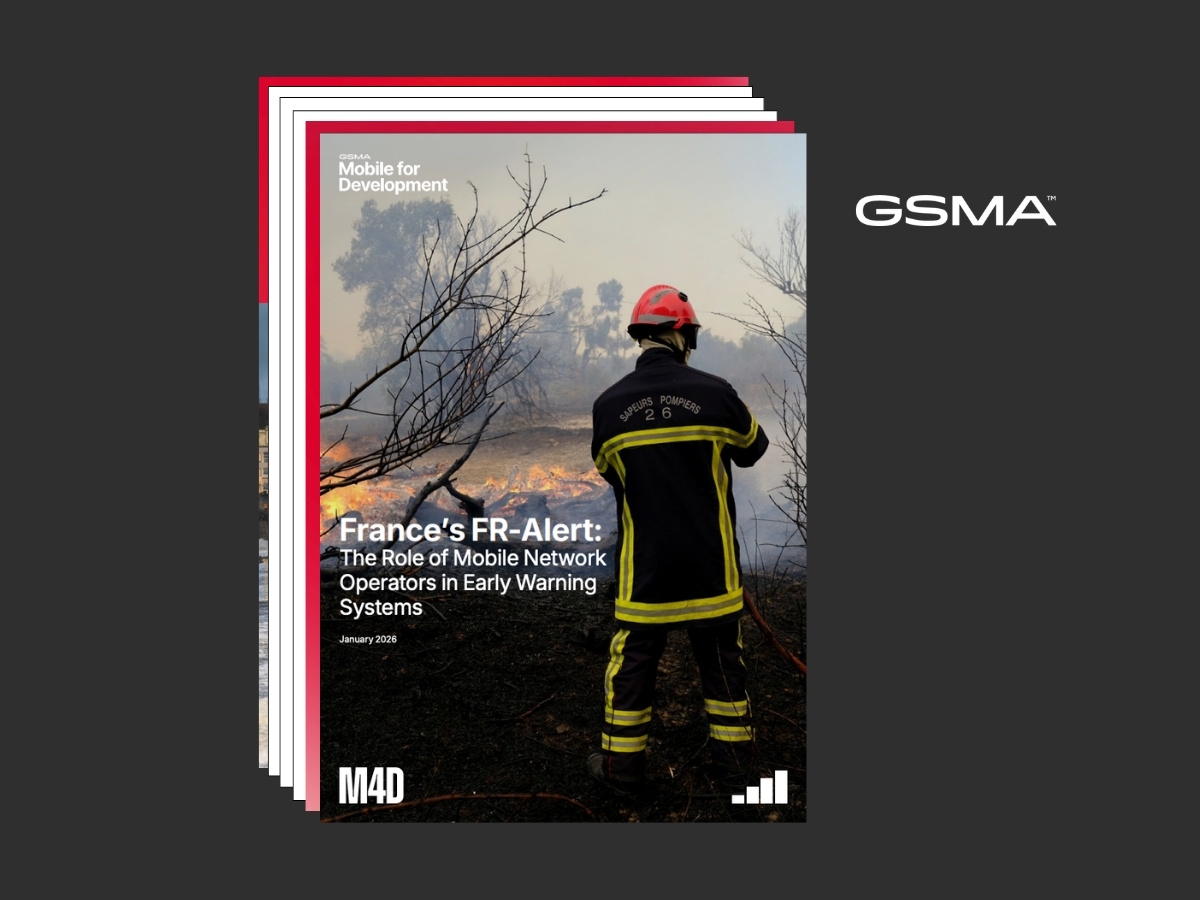 GSMA report on FR-Alert: The Role of Mobile Network Operators in Early Warning Systems" />
An essential technological combination
France is exposed to an array of hazards due to its varied geography and climatic zones as well as 12 overseas territories located across four oceans. Designing an early warning system for such a fragmented territory required a deliberate technological choice: combining cell broadcast (CB) and location-based SMS (LB-SMS) to maximise reach, resilience, and inclusivity at once.
In this context, GSMA has published a report examining the role of mobile network operators in early warning systems, using France’s FR-Alert as a concrete reference. The full report is available in both English and French.
“The result is a comprehensive system that combines cell broadcast (CB) and location-based SMS (LB-SMS) mobile technologies, covers both mainland and overseas France and is fully embedded in national disaster management (NDM) processes.”
FR-Alert: How France aligned policy, people, and technology
The GSMA report uses France’s national early warning system as a lens to explore how mobile-based alerting can be organized at scale. The focus is not on promoting a specific national model, but on analyzing the mechanisms that enable long-term cooperation between public authorities and mobile network operators.
“MNOs have played an instrumental role in the success of FR-Alert, coordinating with public authorities from the outset to build and deploy the system.”
Intersec designed and built FR-Alert in close coordination with France's MNOs, ensuring that each operator could deliver alerts consistently, across all networks and all territories. That technical foundation is what the GSMA report now holds up as a model for the world.
The report looks in detail at:
- Policy and regulation, including how European and national legal frameworks define responsibilities, timelines, and compliance requirements for mobile operators.
- Stakeholders and coordination, highlighting the importance of structured governance and clear operational roles across civil security authorities, regulators, and telecom actors.
- Technology and infrastructure, examining how different mobile alerting technologies were combined to balance performance, inclusivity, and resilience across diverse territories.
- Operational and financial considerations, addressing what it takes to maintain, upgrade, and operate a mobile-based early warning system over time.
The report shows that effective early warning systems are not the result of technology choices alone, but of sustained alignment between institutions, operators, and service providers.
10 key considerations for effective MNO engagement in mobile-based EWS
The most actionable part of the report translates the FR-Alert experience into transferable guidance. The GSMA team distilled 10 considerations for effective MNO engagement, grounded in what actually worked in France and designed to help other countries build the conditions for the same.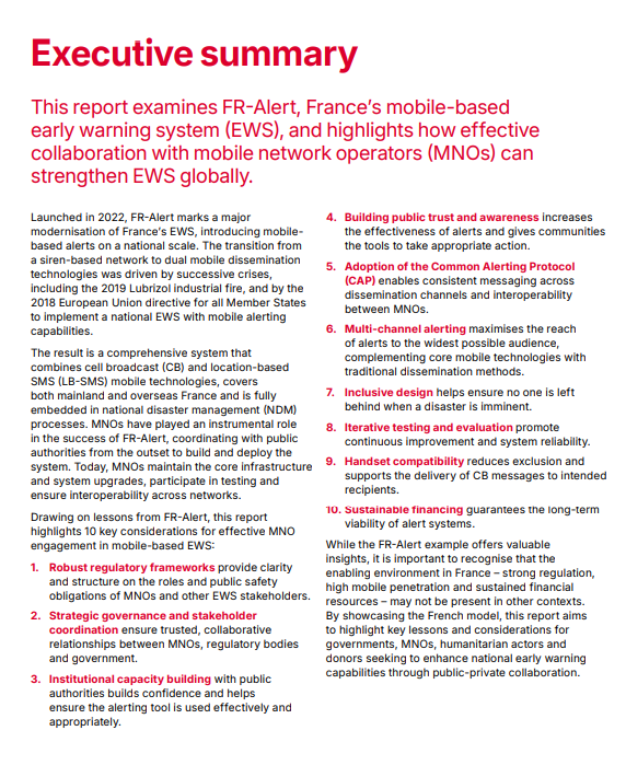
As the technology provider of FR-Alert, Intersec is proud to have been part of this collective effort. We were invited to contribute our technological expertise alongside all the stakeholders involved, and this report is a testament to their work. We would like to extend our sincere thanks to the GSMA researchers, the French Ministry of the Interior, the mobile network operators, and the TDS Group for their commitment to producing such a comprehensive document of the French system. This sustained, multi-stakeholder alignment, between public authorities, operators, and service providers, was not incidental: it was a key driver of FR-Alert's success, and GSMA's analysis makes a valuable contribution to the global conversation on how mobile-enabled alerts can save lives.
Why combine Cell Broadcast and location-based SMS ? 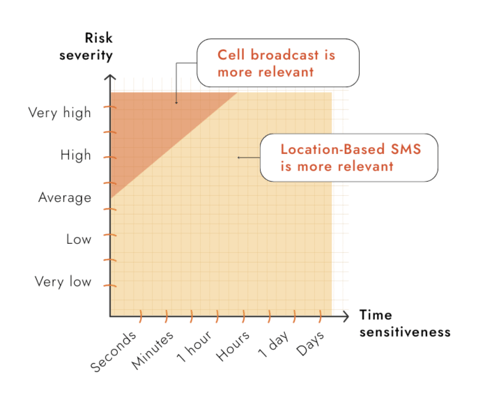
FR-Alert's dual-technology architecture reflects a growing global consensus. Emergency communication experts and authorities increasingly recommend combining Cell Broadcast and Location-Based SMS as the standard for effective public alerting. The two technologies are complementary by design: one built for speed and reach, the other for precision and adaptability.
To understand why this combination matters and how to use each technology depending on the nature and evolution of a crisis, read our dedicated article: Why combine Cell Broadcast and Location-Based SMS?
.jpg)
Editorial team
LinkedinThe Intersec editorial team is made up of professionals who share expert insights on AI-powered innovations, mission-critical communication solutions, and 5G location intelligence across civil protection, homeland security, and telecommunications.

Cell Broadcast Emergency Alerting live in 10 days
47 deployments. Four continents. Active conflict zones. We're not generalists who added public warning to a product catalog. This is all we do — and we're faster, deeper, and more adaptable than anyone.





.webp)


.webp)