 Our insights from Ooredoo’s DECE 2026 on sovereign IA" />
Ooredoo Group invited us to the Digital Ecosystem Conference and Exhibition (DECE 2026), held in Doha in November. Ministers, regulators, mobile operators and technology leaders gathered to discuss policy, sovereignty and the future of ICT in the region.
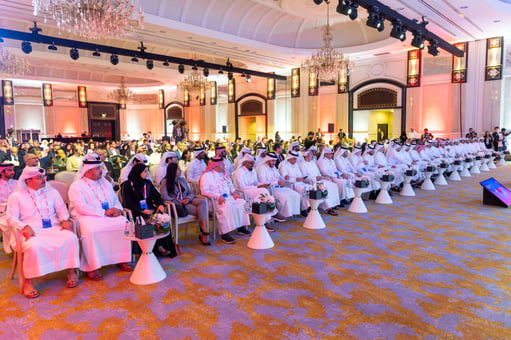
In front of a full room, our Regional Vice President, Petri Leppänen, joined the panel “Sovereign AI: Control, Capability & National Strategy”. The session explored how nations can balance innovation, security and competitiveness while keeping control of their AI capabilities, data and infrastructure. Petri approached the question from our experience in public safety and mobile networks, where sovereignty is a practical, everyday matter. Here are the key messages he shared:
Sovereignty is about control, not location
Where data centers sit matters, but it is only part of the answer. For Petri, the real question is who can change a critical system, stop it or fix it when something goes wrong. When lives are at stake, governments and operators must be able to act right away, without waiting on a third party. AI built on top of public services needs that same level of control.
Mobile operators are natural partners
Mobile operators already run mission-critical services for governments. They route emergency calls, send public warnings and support public safety authorities, under national licenses and national rules. They also hold the network data that AI-powered public services need, and this data can be processed inside the network: only the authorized result is shared, not the raw data.
Trust is built into the design
The mobile network reaches every phone, with no app and no sign-up needed. AI-powered location intelligence helps authorities see more precisely who is in a danger zone and who should receive an alert. To keep citizens’ trust, the level of detail must match the purpose: aggregated trends for planning, a precise location for a rescue. Often, the answer is simply yes or no.
Kuwait: speed and sovereignty together
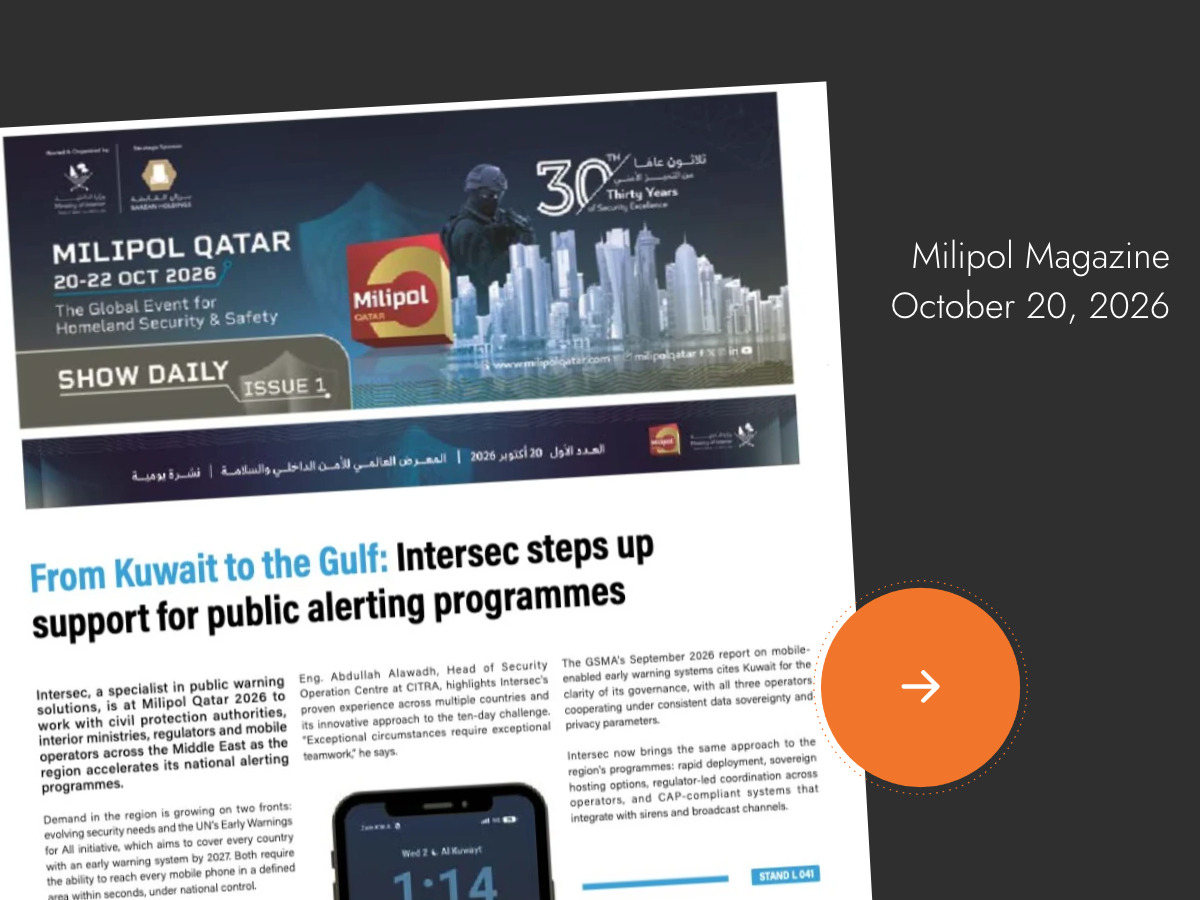
Petri illustrated these points with Kuwait. With the regulator CITRA and the three mobile operators, Zain, Ooredoo and STC, we deployed a national Cell Broadcast public warning system in 10 days, when such projects usually take several months. The system first ran in our secure cloud while the local infrastructure was built in parallel, then moved to Kuwait. Today, Kuwait controls the system and its data.

Making collaboration work
Before closing, each panelist was asked how governments and industry can work together more effectively. Petri’s answer came from the field: when public safety is at stake, the way partners organize their cooperation matters as much as the technology itself. He highlighted three conditions:
- Get everyone in the room from day one. Public authorities, the regulator, the mobile operators and the technology partner should work together from the start.
- Agree on one goal and one deadline. A shared objective and a clear timeline are what made 10 days possible in Kuwait.
- Settle control early. Once everyone knows who controls the systems and the data, working together becomes much easier.
We thank Ooredoo Group and the DECE 2026 organizers for the invitation, as well as Olu Olutola (Greenpoint Technologies) for moderating, and Dr. Umar Azmeh (QICDRC) and Kevin Viret (ArgonX) for a rich exchange of perspectives.
To learn more
→ Intersec Deploys Kuwait’s Public Warning System in Less Than 10 Days
→ Success story: Cell Broadcast in Kuwait
→ Interview - Digital sovereignty in telecoms, with Yann Chevalier
→ Success story: Gulf, network location platform for safety

Editorial team
LinkedinThe Intersec editorial team is made up of professionals who share expert insights on AI-powered innovations, mission-critical communication solutions, and 5G location intelligence across civil protection, homeland security, and telecommunications.

Cell Broadcast Emergency Alerting live in 10 days
47 deployments. Four continents. Active conflict zones. We're not generalists who added public warning to a product catalog. This is all we do — and we're faster, deeper, and more adaptable than anyone.