.svg)
 The Silent Cell Broadcast Opt-Outs: A Blind Spot in Emergency Alerting" />
Cell Broadcast is one of the most powerful emergency alerting technologies available today — it reaches all phones within a geographic area simultaneously, without requiring a phone number or internet connection. Governments worldwide have invested heavily in it, and for good reason. But there is a growing blind spot that authorities rarely discuss: a significant share of the population has simply opted out, and we have almost no visibility into how large that number really is.
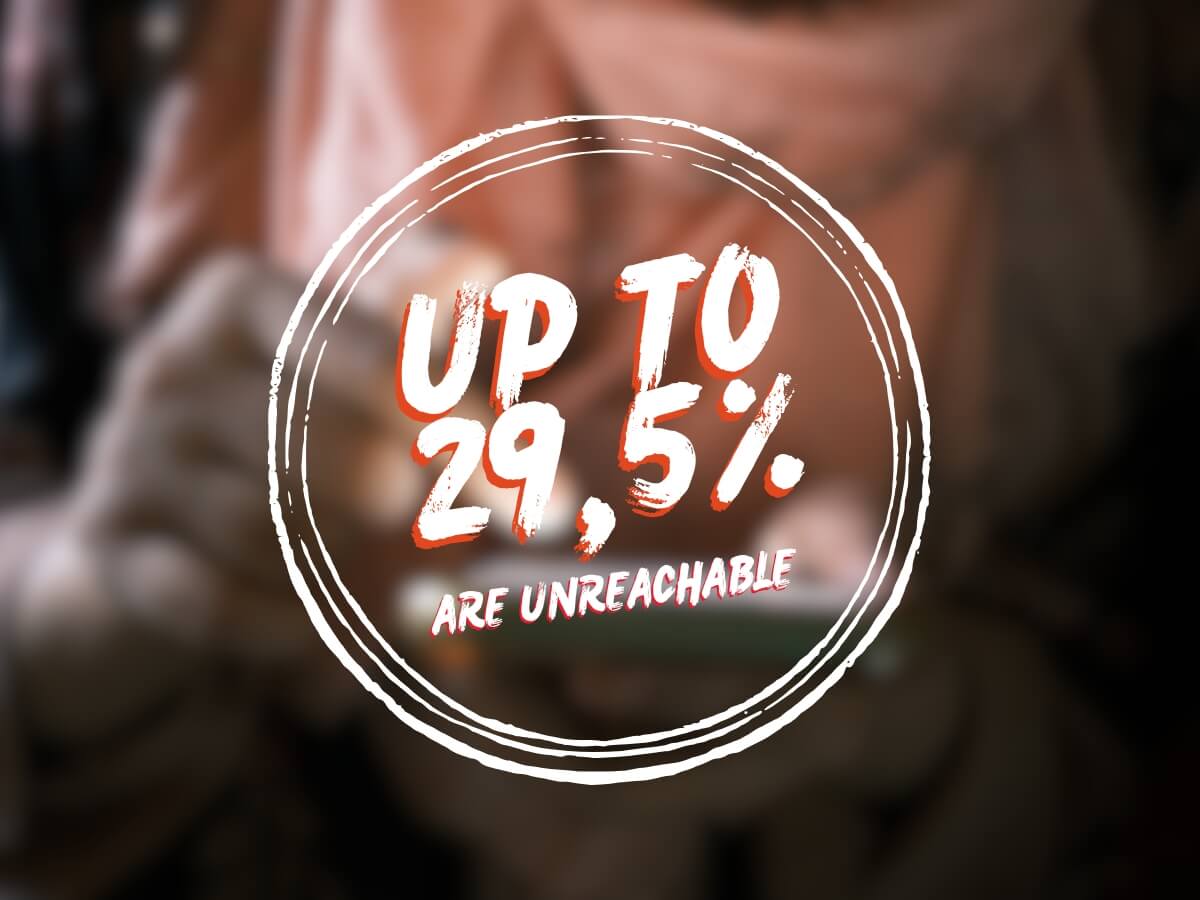
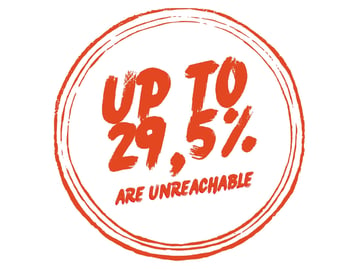 A 2024 national survey by Parker and colleagues in the United States offers a rare and alarming glimpse into this reality. The study found that an estimated 17.5% of American adults had opted out of at least one type of Wireless Emergency Alert (WEA) — the US implementation of Cell Broadcast. In Texas, that figure climbed to 29.5%. The researchers themselves noted that a 17.5% opt-out rate "should be considered high enough to warrant attention." And yet, for most public authorities, this data simply doesn't exist. Because Cell Broadcast by design doesn't track who receives alerts, opt-out rates are structurally invisible — which means the problem tends to go unquestioned. The study also revealed a notable platform effect: iPhone users opt out at significantly higher rates, partly because Apple's interface makes disabling alerts unusually easy — a settings shortcut appears directly on the alert screen.
If numbers like these exist in the US, it is reasonable to ask what they look like in other countries that rely solely on Cell Broadcast for emergency warnings. The uncomfortable answer is: we don't know. And that's precisely the problem. Choosing a powerful technology does not guarantee universal reach. Gaps exist, they are larger than most assume, and they are growing silently.
This is why a multichannel approach to emergency warning dissemination is no longer optional — it is essential. Location-Based SMS, for instance, not only extends reach to those unreachable via Cell Broadcast, but critically, mobile network operators can provide delivery statistics, offering the kind of visibility that Cell Broadcast alone cannot. Combined with digital channels, traditional broadcast media, and emerging satellite-based alerting, a layered strategy ensures that no population segment falls through the cracks. The goal of emergency alerting is not just to send a message — it is to make sure it is received.
To learn more about the topic, here are some interesting reads:
→ Why combine Cell Broadcast and Location-Based SMS?
→ Infographic - Alert dissemination through mobile networks
→ Infographics - Which public alerting technologies to use when facing an emergency?
→ Cell Broadcast Emergency Alerting live in 10 days
.jpg)
Editorial team
LinkedinThe Intersec editorial team is made up of professionals who share expert insights on AI-powered innovations, mission-critical communication solutions, and 5G location intelligence across civil protection, homeland security, and telecommunications.

Cell Broadcast Emergency Alerting live in 10 days
47 deployments. Four continents. Active conflict zones. We're not generalists who added public warning to a product catalog. This is all we do — and we're faster, deeper, and more adaptable than anyone.







.webp)


.webp)