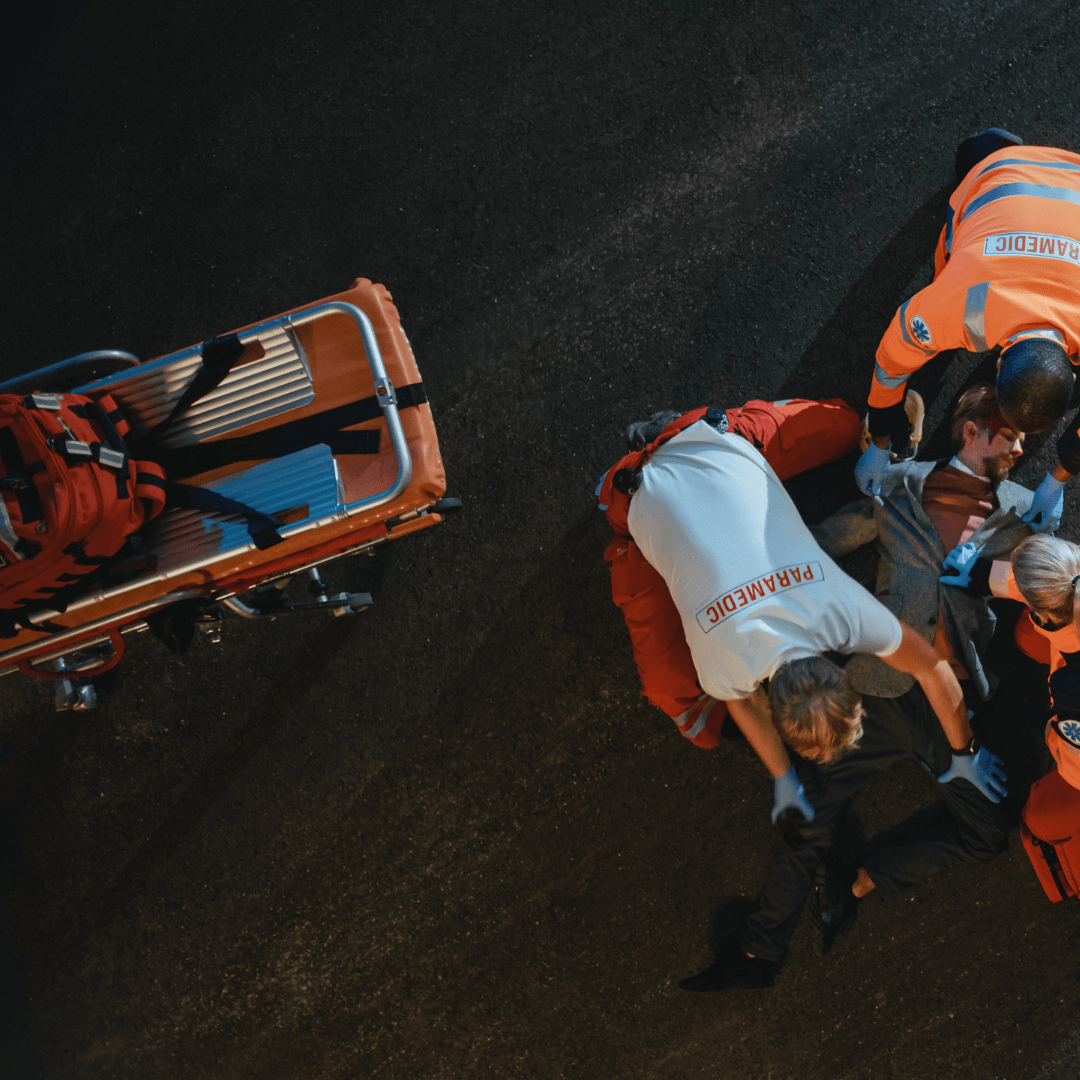
Emergency call location & routing
Our emergency caller location and touring solution combines multidimensional cellular device locating capabilities to provide emergency services with critical, certified, up-to-date information.
It leverages on network-based plus handset-based location techniques and Advanced Mobile Location (AML) available data, to make the most of it in all circumstances, allowing first responders them to save more lives and protect better assets.

Future-proof emergency location service
Fully compliant
As member of standardization bodies, Intersec implements norms and guidelines related to emergency call handling and caller location management: 3GPP, ETSI, EMTEL, ATIS, IETF, GSMA, EENA, GDPR, Etc.
99.999% uptime
When it comes to emergency calls, every second counts and failure is not an option. Carrier-grade “five nines” is of essence to mission-critical communications with public in distress.
Telco expert since 2004
Intersec, an ICT specialist since its inception, offers a robust catalog of location technologies, providing public safety answering points (PSAPs) with certified and highly accurate location data for dispatch.
Combine AML & network-derived location
Fast, reliable and accurate caller location
moreWhen an emergency call is initiated, the Communication Service Provider (CSP) must identify the caller's location quickly and accurately. Identified location is instrumental for proper call routing and call setup with the relevant Public Safety Answering Point (PSAP) in charge of the situation in the concerned area. Intersec emergency call handling solutions cover any type of networks and calls:
- Mobile carriers, Fixed broadband carriers, Emergency service networks, ESInet/NGCS, NG112/911/xxx networks, …
- Circuit-switched calls, Packet-switched and IMS calls, 2G, 3G, 4G, VoLTE, 5G, VoNR, WiFi calling / VoWiFi, VoIP, ...
Route the emergency call to the most relevant PSAP
moreIntersec passive location technology automatically retrieves access point identification of all handsets connecting to VoWLAN and looks-up for their corresponding location on a Wi-Fi access point location database. On the fly, the solution ensures their consistency, leveraging on the mobile network cell cartography. The operator therefore benefits from an emergency call solution fully compliant with local regulation, that provides trusted and reliable location for all emergency calls in any situation.
Reduce response time
moreTo appropriately handle the situation, PSAPs also require access to the caller's location information. Another critical function of the original telecommunications operator is to report certified and most accurate locations with human-reading addresses to be used in dispatching and guiding emergency units to the exact site of the incident and minimizing vertical response time.

Intersec emergency call solution
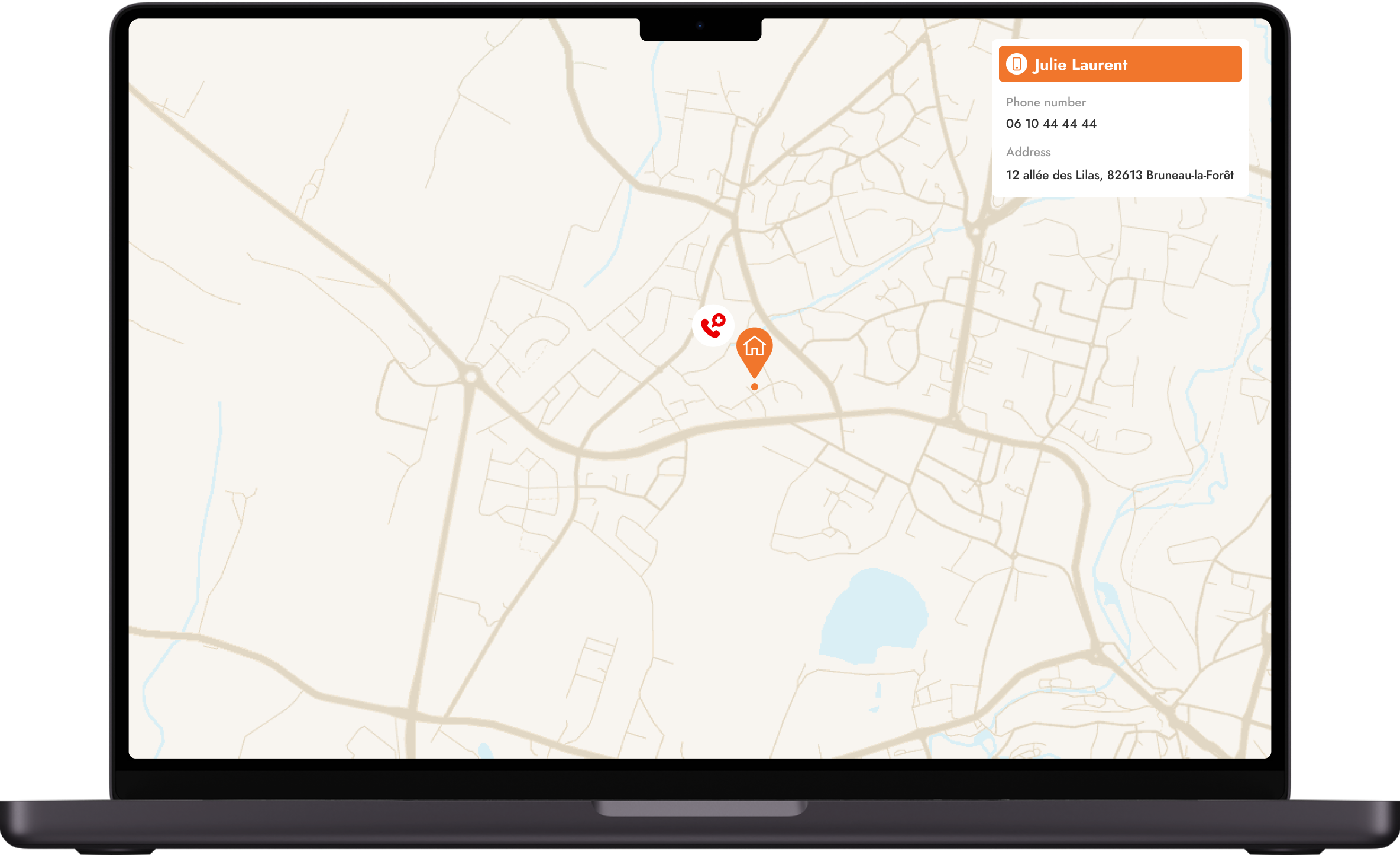
GeoSafe EC
Locate and route all emergency calls
As technology develops, so does our ability to respond to emergency calls (EC). Combining positioning technologies not only accurately routes the call or SMS to the most relevant PSAP, but, most importantly, ensures the reliability and accuracy of the location information, whether the caller's phone is equipped with AML or not. In other words, AML-related data combined with MNO-originated location ensures that the most accurate and reliable location information is reported and that no one is left behind.
Seamless location & routing
On-demand & mass geolocation
Location-based routing
AML
2G to 5G
VoLTE, VoWiFi, VoNR
All emergency LCS
NG112-911-xxx & PSAPs
Key capabilities - to delete
Functions seamlessly with emergency LCS, from legacy PSAP infrastructures to current NG112-911-xxx emergency communication networks and PSAPs; Uses standard protocols.
Comprehensive & fully modular
Network- & device-agnostic
Seamless integration
Comprehensive & fully modular
Network- & device-agnostic
Seamless integration
Functions seamlessly with emergency LCS, from legacy PSAP infrastructures to current NG112-911-xxx emergency communication networks and PSAPs; Uses standard protocols.
Case study: Telecom regulatory compliance
Context
The Téléphone Grave Danger (TGD) is a system set up by the Ministry of Justice to help victims of domestic violence in less than seven minutes. Equipped with an alert button, the TGD can be used to alert national police and gendarmerie units 24 hours a day, 7 days a week. Article 41-3-1 of the French Code of Criminal Procedure allows the caller to be geolocated when the alert is triggered.
Solution
-
All the victim has to do is press the emergency button to alert emergency services. There's no need to call 17, wait, or even speak. Intersec's platform, integrated into Orange's network architecture, instantly provides the victim's geolocation.
-
Intersec's solution then forwards the precise, complete geolocation information in real time to the relevant emergency services (nearby police and gendarmerie) so that they can intervene without delay. This rapid response protects victims and can save lives.
-
The courts decide on the allocation of these phones, and hand them over to the people concerned. The system has proved its worth, and the number of TGDs allocated is increasing every year: 300 in 2019, 727 in 2020, 3,500 in 2022, and almost 5,000 in 2024.
For years, Intersec's marketing solution and the strategic and tactical support we have received have enabled us to make great achievements, to focus more on strategy, and to demonstrate a direct and growing contribution to Orange Guinea's revenues.
Nene Hadiatou Bah
CVM & Loyalty Manager, Orange Guinea
Featured content
Emergency call location: anytime, anywhere, any device
Telecom regulatory compliance for emergency services
Get started with Intersec

We help telcos and public authorities embrace the digital revolution as we believe data transform the way our customers work.
Let us answer your questions and explain how we can help.
Subscribe to our newsletter
Some of our prestigious clients