.svg)
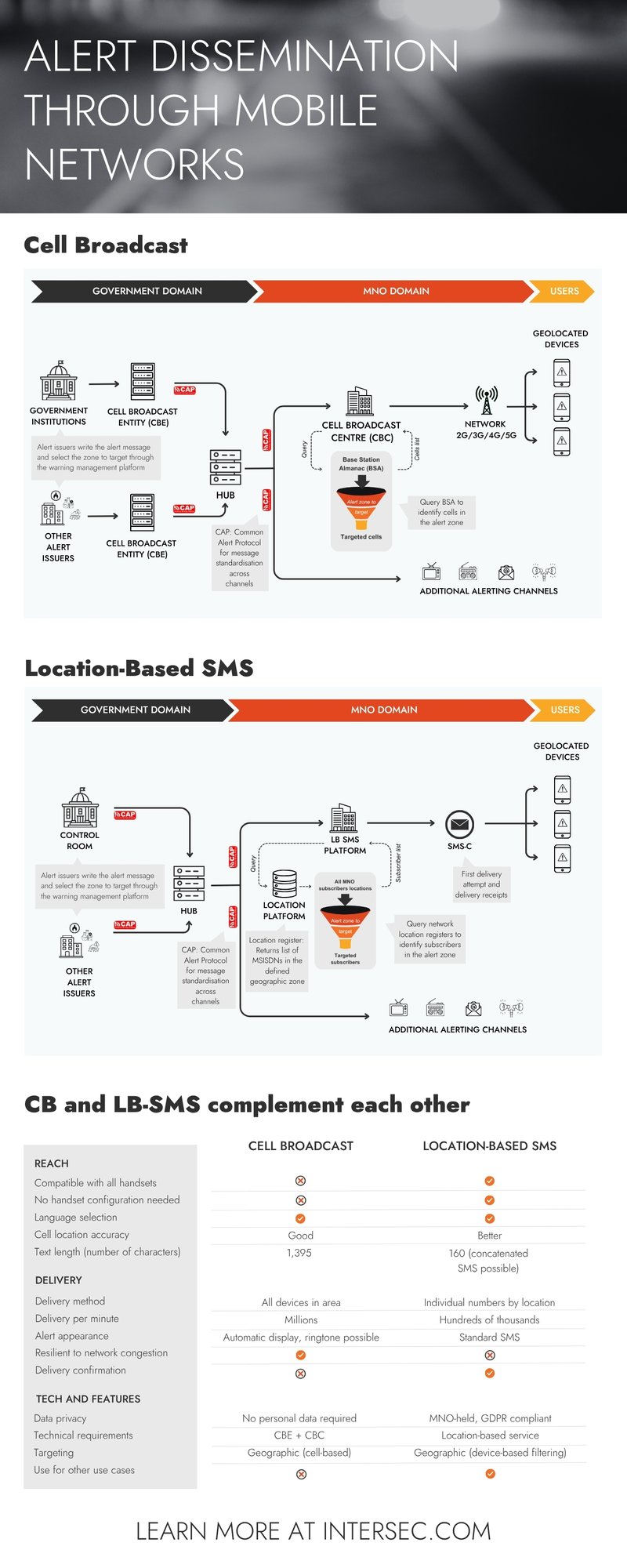
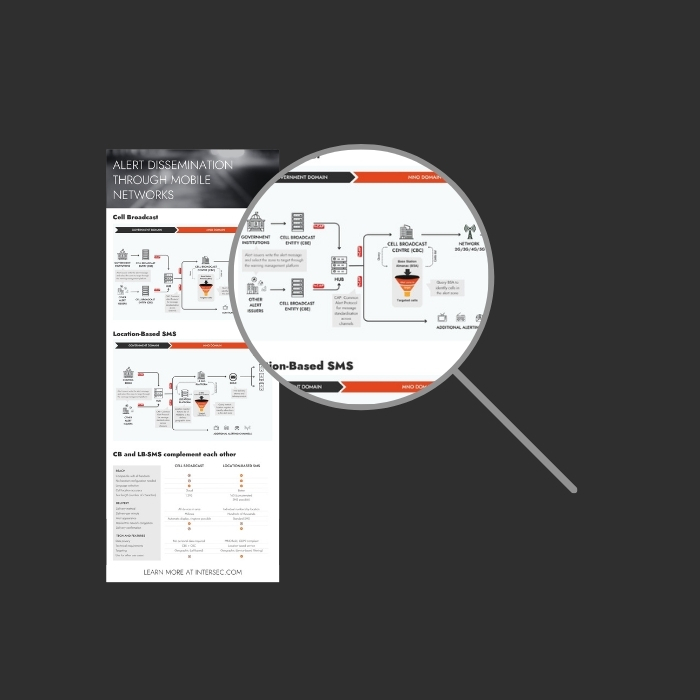 Infographic - Alert dissemination through mobile networks" />
Two technologies allow public authorities to send geo-targeted alerts directly to mobile phones:
- Cell Broadcast: targets mobile network masts rather than individual terminals to push alerts simultaneously to all devices in a defined geographic area, with no opt-in or personal data required.
- Location-based SMS: sends targeted alert messages to individual subscribers identified by their real-time location within the mobile network, across all SMS-compatible devices and without any handset configuration, with delivery confirmation.
The infographic below maps the full dissemination chain for both, from alert issuers in the government domain through to end users, showing where each technology operates within the MNO domain and how messages reach devices on the ground.
Beyond the process flows, the comparison table at the bottom puts the two technologies side by side across reach, delivery, and technical features. The contrast is clear: they are not interchangeable, and they are not in competition. Each covers gaps the other cannot, which is precisely why combining both remains the most robust approach to public warning system design.

Learn more:
→ FR-Alert success story: A European reference for public alerting
→ Cell broadcast service for mass alerting
→ Location-based SMS for targeted alerts
→ Why combine Cell Broadcast and Location-Based SMS?
.jpg)
Editorial team
LinkedinThe Intersec editorial team is made up of professionals who share expert insights on AI-powered innovations, mission-critical communication solutions, and 5G location intelligence across civil protection, homeland security, and telecommunications.

Cell Broadcast Emergency Alerting live in 10 days
47 deployments. Four continents. Active conflict zones. We're not generalists who added public warning to a product catalog. This is all we do — and we're faster, deeper, and more adaptable than anyone.








.webp)


.webp)